Performance Marketing
Lead Generation
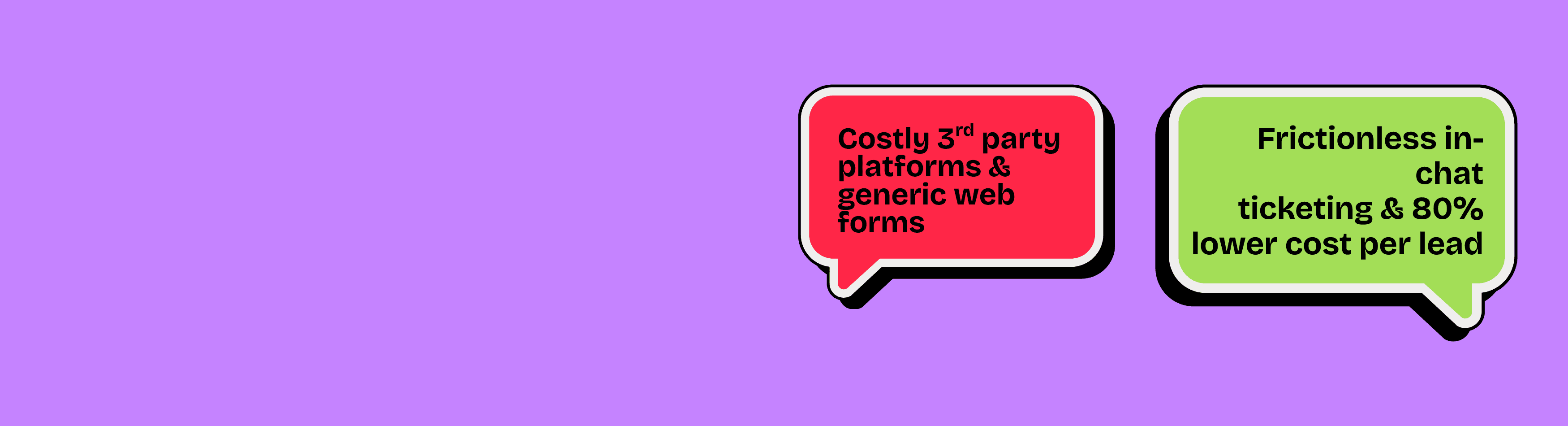
With the peak season in, Edvoy didn't have enough qualified students coming through the door. They had a significant market presence and supply built. The demand, however, couldn’t match up. This was mainly because their system for finding and filtering students was broken at the foundation. This prevented them from scaling, and more spending just meant more waste.
That's where we came in. Over three months, we rebuilt how Edvoy found, filtered, and qualified students across four Indian markets. By the end, counsellors were working a pipeline of students who already knew where they wanted to go, what they wanted to study, and when they were starting.
About The Company
Edvoy is one of the most recognised names in global study-abroad platforms, connecting Indian students to universities across the UK, Canada, Ireland, Australia, and beyond.
In India, Edvoy operates across four key regions: Delhi, Tamil Nadu, Hyderabad, and Vijayawada. With 100,000+ students counselled, 750+ partner institutions, and 18+ years of experience across 65+ nationalities, the product carries genuine trust in the market.
Study abroad is a slow, expensive decision for any family. As Edvoy headed into peak intake, the acquisition funnel needed to do more than generate volume.
The Challenge
Going into peak intake with a funnel under pressure
By the time we came in, the India account was already carrying real volume, but the run-up to peak intake had stretched the existing setup. Daily spend was running above target to hit the daily lead numbers, and CPL had drifted above benchmark.
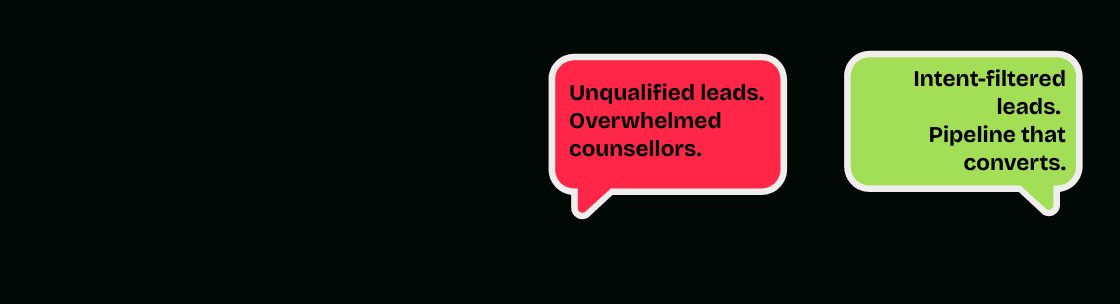
More importantly, majority of the leads coming through weren't matching the profile counsellors actually needed: students who were either very early in their decision, exploring without a clear destination, or outside the eligibility envelope for Edvoy's partner institutions. 25–30% of the leads were being marked 'not interested' by the sales team. With intake season closing in, the cost of that mismatch was about to compound.
THE MANUAL BOTTLENECK
Ad Creative Fatigue
Redudant ads were run for audiences leaving them burnt.
No Destination Clarity
A singular campaign was used in all the five destinations
Unfiltered Lead Capture
Not having any filters allowed all type of leads to get through
Late-Stage Disqualification
About 80% leads were disqualified at the last stage
Counsellor Capacity Wasted
Counsellors sorted noise without closing students
Manual Bottlenecks that prevented Edvoy from getting the qualified leads
Our Approach
Understanding the problem before building the solution
Before running towards the solution, we wanted to deeply understand how Edvoy's India funnel had been running and how the four regional markets behaved differently. We connected with the sales teams across all four regions to map out the job to be done: what made a lead actually useful to a counsellor, where the drop-offs were happening, and what the existing setup was and wasn't doing. Those conversations surfaced three things that would shape everything that followed.
The account structure was decentralised and impossible to read.
All of the destinations, namely the UK, Canada, the USA, Ireland, and Australia, were running together in a shared campaign set. This made it hard to read what was actually working by destination or region. With peak season, demanding faster, sharper decisions visibility.
Creative messaging wasn't speaking to the actual decision.
CRM data wasn't feeding back into the ad platform.
Lead signals were sitting in the CRM but not flowing back to Meta in a way that could improve targeting or signal quality. Connecting those loops was a straightforward MarTech fix but one with a real impact on how Meta's algorithm read and optimised toward the right conversions.
The Solution
With those three insights locked in, we built the engagement in two phases: first, stabilise the structure and the creative ahead of intake. Then, scale what was clearly working as each destination proved itself. Here's how that played out in practice.
Month 1
Month 2
Month 3
Performance Audit
Research
Account strategy
MarTech Setup
Campaign Planning
Campaign Launch & Optimisation
Reporting & Analytics Loop
One-time
Monthly
Phase 1: Performance audit
Phase 2: Research
We spoke to every regional sales team across Delhi, Tamil Nadu, Hyderabad, and Vijayawada, mapping student pain points, counsellor drop-off patterns, and the comms gaps showing up as disqualified leads.
We also looked at how Edvoy was being perceived against IDP, Leverage Edu, and Yocket across the study-abroad market.
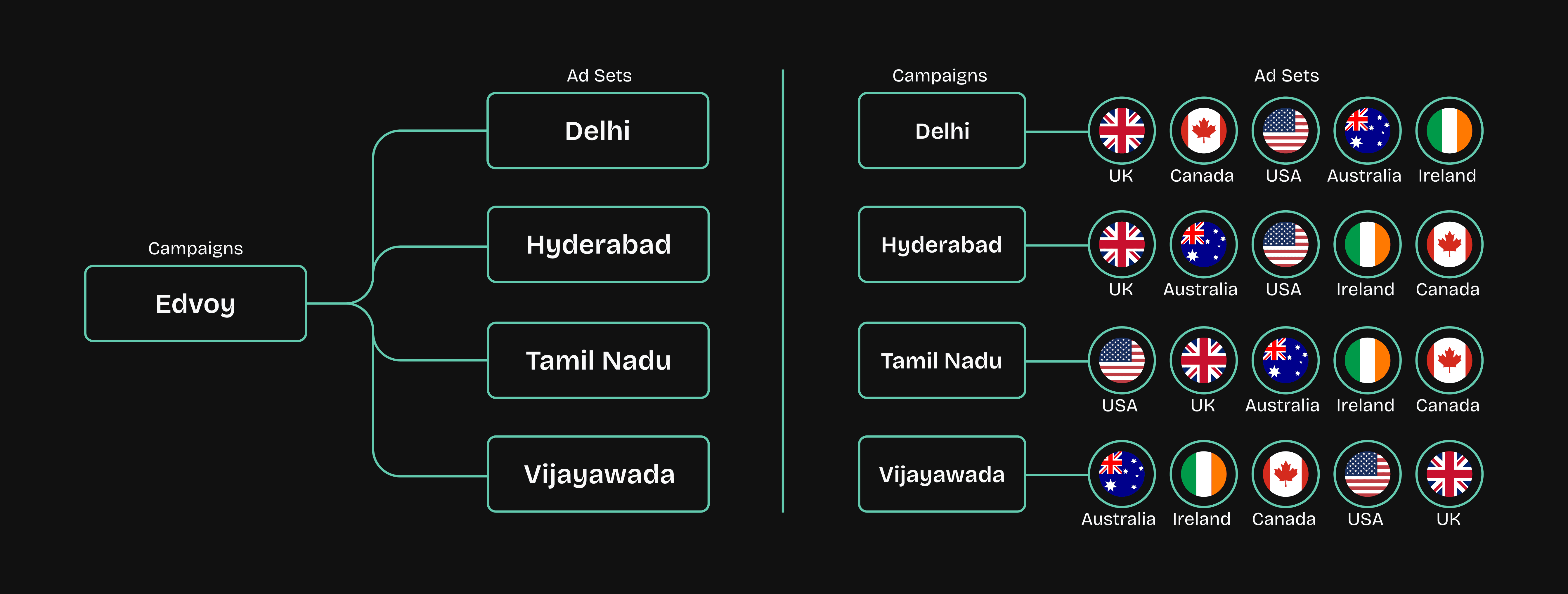
Before-After Split of Account Strategy: From Campaign Budget Optimization to Ad Budget Optimization
Phase 4: MarTech Setup
Before the first campaign went live, we locked the technical foundation.
Meta Business Suite
This was structured by region at the campaign level, destination at the ad set level, matching the architecture built in strategy
Meta Pixel + Conversion API
This was installed and verified across Edvoy's lead properties, feeding clean conversion signals back to Meta's algorithm from day one
Intent and readiness filters
This was built directly into lead forms, so students self-qualified on destination, course level (UG/PG), and intake timeline before a counsellor ever saw them.
Click-to-WhatsApp
This was configured as an alternate conversion path for regional markets with high WhatsApp penetration.
With the infrastructure set, every lead was trackable, attributable, and qualified at source when campaigns launched.

"
Flip Funnel brought a holistic marketing lens and worked with us to build the CAPI and tracking setup with CRM. And that changed everything, because with the real data, we stopped spending on incovertible leads.
Sirajudeen Mohammed Yasar | Head of Product
Edvoy
Phase 5: Campaign planning
With structure and targeting settled, we built intake-specific calendars, regional budget splits, creative briefs, and A/B test roadmaps for every destination and persona. Planning ran on a clear weekly rhythm.
Phase 6: Campaign launch and optimisation
The optimisation was performance as follows:
End-to-end Meta setup across all four regions.
Creative rotation, budget reallocation, and audience refinement ran every week. Stock footage was discarded.
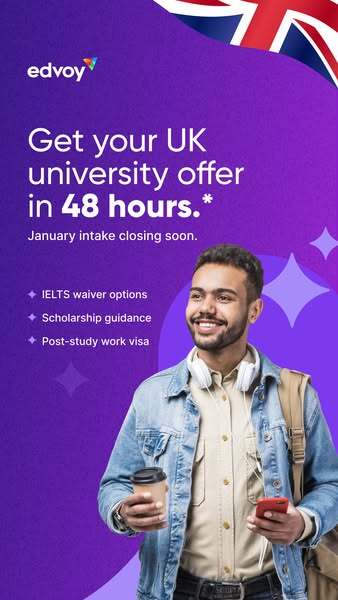
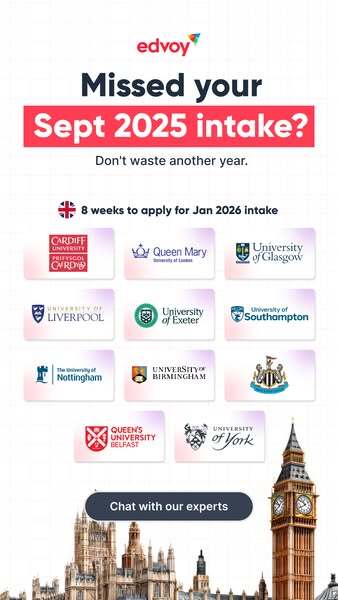
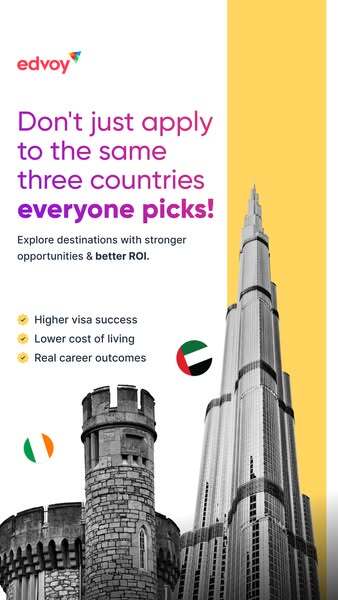
Destination-specific messaging and Edvoy-branded visuals that a student in Chennai or Delhi could actually see themselves in.
Intent and readiness filters went directly into the conversion forms, so leads had already self-qualified on destination preference, course type, and intake timeline before reaching a counsellor.
Phase 7: Reporting and analytics loop
Daily CPL tracking, geo breakdowns, and creative scoring fed back into planning every week. Every insight went straight into the next cycle of decisions. Reporting ran the operation; it wasn't a separate deliverable.
What Actually Changed for Edvoy
Structure created accountability
Destination-specific ads re-engaged burnt audiences and brought in students who were ready to act, not just browsing.
Destination-specific creative rebuilt signal quality
UG creative addressed parental concerns. PG creative addressed career outcomes. The message finally matched the decision-maker.
The weekly reporting loop compounded performance
Daily CPL tracking fed back into weekly decisions. The system tightened with every cycle, CPL fell consistently across all three months.
The Results
Since we had to sustain a particular lead volume during the peak month, we identified and eliminated non-performing factors and created a more stable performance marketing structure that helped Edvoy scale at the right time. Over three months, qualified lead volume went up, ad spend came down, and disqualification fell consistently month over month.
Month-over-month progression
Once the structure was stable, we expanded beyond the UK pilot to Ireland, Australia, and Dubai as each destination proved consistent. By the end of month three, the account was running at a cumulative CPL well below the original target.

Combined Bar Graph and Line Chart showing the reduction in the ad spend and the rise in qualification rate
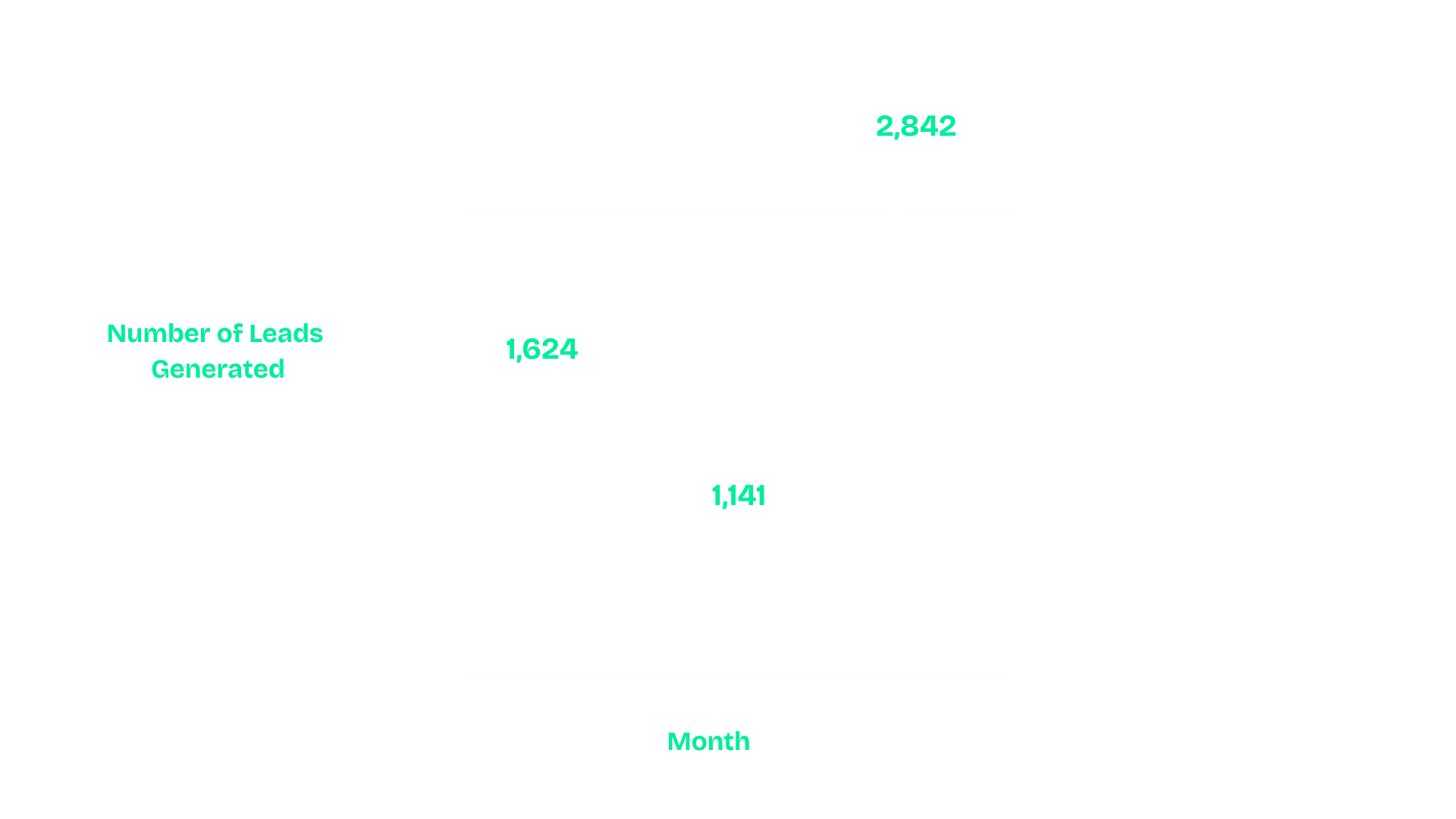
Line Chart representing the rise in the number of leads generated in sales after the Flip Funnel Intervention
The full-funnel picture
4,000+ student leads captured at monthly volume.
2,000+ MQLs/month — students with confirmed destination, course preference, and intake timeline.
900 sales-qualified opportunities with high-intent students ready for counsellor engagement.
₹198 Cr+ monthly qualified enrollment pipeline.
45% MQL-to-Opportunity conversion rate.

"
Honestly, what surprised me was how much homework they did before anything went live. By the time campaigns launched, it didn't feel like working with an external agency, it felt like they knew our market as well as we did.